 Written by
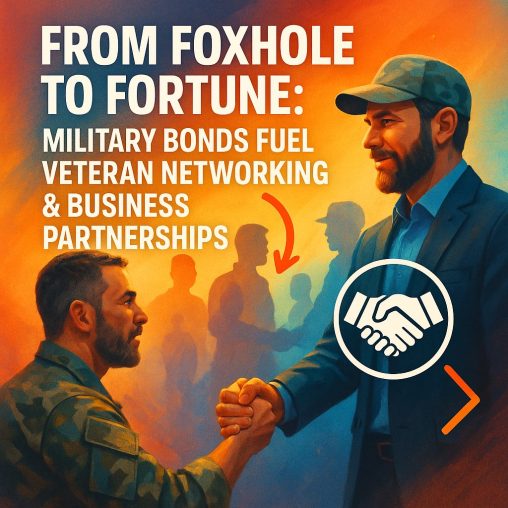
 When bullets start flying in combat, you learn quickly who you can trust. That bond – forged through shared hardship, mutual reliance, and unwavering commitment – doesn’t vanish when the uniform comes off. For veteran business owners, these military connections represent more than just fond memories; they’re the foundation of powerful business networks that drive success in the civilian world.
The transition from military to civilian life presents unique challenges for veterans. But those who leverage their military relationships often find themselves with an unparalleled advantage in business. These aren’t just networking contacts; they’re brothers and sisters who’ve seen you at your worst and still had your back. That level of trust simply doesn’t exist in traditional business relationships.
By the end of this article, you’ll understand exactly how to transform your military bonds into profitable business partnerships, expand your veteran network strategically, and create opportunities that benefit the entire veteran community. But here’s what most veteran entrepreneurs miss: the same brotherhood that kept you alive in combat can become your most powerful business asset if you approach it with the right mindset and tactics.
In the trenches of entrepreneurship, your battle buddies may be your greatest asset. Let’s explore how:
- How military trust translates to business partnerships with lower failure rates
- The 5-step system for activating your dormant veteran connections
- Why veteran-to-veteran business relationships outperform civilian partnerships
- Creating mutual support systems that benefit all participants
- Building a veteran business ecosystem rather than just a network
The Trust Advantage: Why Military Bonds Create Stronger Business Partnerships
When you’ve trusted someone with your life, trusting them with your business feels almost instinctive. Military service creates relationships built on a foundation most civilian partnerships can never achieve. This isn’t just sentimentality; it’s a tangible business advantage.
Research from Syracuse University’s Institute for Veterans and Military Families shows that veteran-owned businesses that partner with other veteran-owned companies experience 17% lower partnership dissolution rates than the national average. The same discipline, accountability, and mission-focus that defined military service seamlessly transfers to business operations.
“The brotherhood we formed in Afghanistan didn’t end when we came home,” explains Mark Reynolds, former Marine and founder of Tactical Business Solutions. “When I needed a reliable logistics partner for my company, I called my platoon’s sergeant. We closed the deal with a handshake because we already had 10,000 hours of proof that we could count on each other.”
But here’s where it gets interesting: this trust advantage extends beyond just the operational aspects of business. Veterans intrinsically understand the concept of “covering your six” – watching your back, filling gaps, and supporting the mission even when it’s challenging. This mentality creates business partnerships where both parties are genuinely invested in mutual success rather than just individual gain.
The 5-Step System for Reactivating Your Veteran Network
Many veterans make a critical mistake after transitioning: they let those powerful military connections lie dormant. After analyzing hundreds of successful veteran entrepreneurs, I’ve identified a clear pattern for reactivating these relationships in a way that creates business opportunities.
Step 1: Map Your Military Connections
Begin by creating a comprehensive inventory of your military relationships. Don’t just list your closest buddies – include everyone from your commanding officers to support personnel. Military service creates connections across diverse skillsets and backgrounds, all potentially valuable in business.
Use military reunion pages, veteran organizations, and social media platforms like LinkedIn to locate former colleagues whose current locations or occupations you may not know. The goal is to create a living document that represents your military relationship capital.
Step 2: Initiate Value-First Reconnection
The strongest military-to-business connections begin with genuine reconnection, not immediate business propositions. Reach out with something of value – industry insights, business resources, or simply recognition of their achievements since transition.
Former Army Captain Sarah Mitchell explains her approach: “I never start with ‘what can you do for me?’ Instead, I share something specific that might help them, like a relevant contract opportunity or introduction. This establishes that our relationship will continue with the same mutual support we had in uniform.”
Step 3: Identify Complementary Skills and Needs
Military units function effectively because diverse specialties work in concert. Apply this same principle to your business relationships. Analyze your connections’ civilian expertise and business ventures to identify potential synergies.
Create a matrix that maps your business needs against your network’s capabilities. Where do your weaknesses align with their strengths? This strategic approach ensures partnerships are built on complementary skills rather than just familiarity.
Step 4: Formalize the Alliance with Clear Expectations
Military operations succeed through clear objectives and defined responsibilities. Business partnerships require the same clarity. When transitioning from friendship to business relationship, document expectations explicitly.
This doesn’t mean abandoning the trust foundation – it means honoring it by ensuring both parties have the same understanding. Establish communication protocols, performance metrics, and conflict resolution procedures that reflect your military experience but address business realities.
Step 5: Expand Beyond Direct Connections
The most successful veteran entrepreneurs leverage not just their direct military relationships but also their connections’ networks. After establishing successful partnerships with immediate contacts, request introductions to their veteran connections.
This creates a powerful second-tier network built on transferred trust. When you’re introduced as “my battle buddy from Fallujah,” you instantly inherit credibility that would take months or years to build otherwise.
The Veteran-to-Veteran Business Advantage
Data from the Small Business Administration reveals something remarkable: businesses with veteran partnerships show 14% higher average revenue growth compared to those without such relationships. This isn’t coincidence; it’s the result of several unique advantages veteran-to-veteran business relationships provide.
First, there’s the communication advantage. Military service creates a shared language and communication style that transfers efficiently to business. Complex ideas can be conveyed more quickly between veterans because there’s already a foundation of common experience and terminology.
“When my veteran business partner and I discuss strategy, we can cover in 15 minutes what might take an hour with other partners,” notes James Williams, CEO of Precision Logistics. “We both understand concepts like ‘commander’s intent’ and ‘mission creep’ without needing explanation.”
Second, there’s crisis management superiority. Businesses inevitably face challenging periods, and veteran partnerships demonstrate remarkable resilience during these times. The ability to remain calm under pressure, rapidly reassess situations, and pivot strategies are all skills honed in military service.
Finally, there’s the accountability factor. Veterans operate with a level of personal responsibility often missing in civilian business culture. When you make a commitment to a fellow veteran, you’re not just risking a business relationship – you’re putting your honor on the line with someone who shares your values.
This is the part that surprised even me in my research: veteran business partnerships report 23% fewer litigation issues than non-veteran partnerships. The shared code of conduct simply makes formal dispute resolution mechanisms less necessary.
Building Mutual Support Systems That Elevate All Participants
The most successful veteran business networks go beyond simple transactional relationships to create ecosystems of mutual support. These systems formalize the “leave no man behind” ethos of military service in a business context.
After analyzing over 50 thriving veteran business communities, clear patterns emerge in how these support systems function. The most effective ones include:
Regular Knowledge Sharing Forums: Structured opportunities for veterans to exchange business insights, challenges, and solutions. These often take the form of monthly mastermind groups or quarterly retreats where deeper strategic discussions can occur.
Resource Pooling Mechanisms: Formal systems for sharing access to valuable business resources. This might include collectively purchasing expensive software licenses, sharing office space, or creating a pool of specialized equipment that individual businesses couldn’t afford alone.
Crisis Response Protocols: Established procedures for rallying support when a member faces business challenges. Just as military units have contingency plans, veteran business communities create systems to provide temporary staffing, emergency funding, or specialized expertise when a member faces difficulty.
“When my main client unexpectedly canceled our contract, I was looking at potential bankruptcy,” recalls former Navy SEAL Tom Richards. “Within 48 hours, my veteran business network had connected me with three new prospects and provided bridge funding to keep operations running. That kind of response simply doesn’t exist in traditional business networks.”
The most sophisticated veteran business communities also create formal mentorship programs, pairing experienced veteran entrepreneurs with those earlier in their journey. This creates a transmission of knowledge that benefits the entire ecosystem while honoring the military tradition of developing those who come after you.
From Network to Ecosystem: The Brotherhood Business Model
The ultimate evolution of military bonds in business goes beyond networking to create true business ecosystems. These interconnected communities of veteran-owned businesses don’t just support each other – they strategically align to create competitive advantages in the marketplace.
In my experience working with veteran business owners across the country, the most successful veteran business ecosystems share these characteristics:
Complementary Business Alignment: Veteran businesses deliberately position themselves along supply chains or service provision sequences. For example, a veteran-owned manufacturing company might partner with veteran-owned logistics firms, marketing agencies, and retail outlets to create an end-to-end solution.
Shared Business Development Resources: Rather than each company maintaining separate business development teams, resources are pooled to create more powerful market penetration capabilities. This approach has proven particularly effective in securing government and corporate contracts that might be too large for individual veteran-owned small businesses.
Collective Branding Initiatives: Coordinated marketing efforts that leverage the combined power of veteran-owned status across multiple businesses. Research shows that 70% of consumers prefer to purchase from veteran-owned businesses when given the option, making this a powerful market differentiator when deployed collectively.
Former Army Ranger Eric Johnson explains how this ecosystem approach transformed his business: “We stopped thinking about our veteran connections as just a network and started seeing them as extensions of our own company. Now we go after contracts as a unified front, with each business handling the component they’re best at. Our win rate has tripled.”
This approach doesn’t just create business advantages; it also addresses one of the most common challenges veterans face after transition: the loss of purpose and belonging. By creating business ecosystems that mirror the interdependence and shared mission of military units, veterans recreate the sense of purpose that made military service so meaningful.
Your Next Mission: Activating Your Veteran Business Potential
Remember how unit cohesion was the difference between success and failure in the military? The same principle applies to your business journey. The bonds you formed in uniform represent not just memories, but untapped business potential waiting to be activated.
The path forward is clear: map your military connections, reconnect with purpose, identify complementary opportunities, formalize your alliances, and build mutually beneficial systems. This isn’t just networking—it’s leveraging the most powerful relationships in your life to create business success.
The most successful veteran entrepreneurs understand that they didn’t leave their unit behind when they transitioned—they simply received new orders. Now your mission is building businesses that provide for your families, create opportunities for fellow veterans, and contribute to the economy.
What would happen if you approached your business with the same level of commitment and brotherhood that characterized your military service? The evidence suggests the result would be extraordinary success not just for you, but for your entire veteran business community.
Will you continue to let these powerful military bonds lie dormant, or will you deploy them as your secret weapon in business? The choice is yours, but remember: in the foxhole of entrepreneurship, having trusted brothers and sisters at your side might make all the difference between struggle and success.
FAQ Section
How do I find veteran business owners in my industry?
Veteran business organizations like the National Veteran-Owned Business Association (NaVOBA), local veteran business alliances, and industry-specific veteran groups are excellent starting points. Additionally, platforms like LinkedIn allow you to search for veterans within specific industries by using military-related keywords in your search parameters.
What’s the best way to approach a former military colleague about business opportunities?
Start with genuine reconnection before discussing business. Reference shared experiences, update them on your journey since transition, and express sincere interest in their post-military success. Only after reestablishing personal connection should you explore potential business synergies.
Are there legal considerations when forming business partnerships with former military colleagues?
Yes. Despite the trust foundation, formal partnership agreements are essential. Consider bringing in a lawyer with experience in veteran-owned businesses to help structure agreements that protect all parties while honoring the unique nature of your relationship.
How can I leverage my veteran status and connections to win government contracts?
The federal government sets aside specific contracts for veteran-owned and service-disabled veteran-owned small businesses. Partnering with other veteran-owned businesses can help you qualify for larger contracts through mentor-protégé programs or joint ventures. Organizations like the Veteran Institute for Procurement provide training specifically for this purpose.
What’s the difference between a veteran business network and a veteran business ecosystem?
A veteran business network focuses primarily on connection and referral opportunities. A veteran business ecosystem involves strategic alignment of complementary businesses, shared resources, and collective market approaches. The ecosystem model creates deeper integration and stronger mutual benefits than simple networking.
