When you take off the uniform for the last time, the mission doesn’t end. It simply changes shape. For hundreds of thousands of military veterans, the transition back to civilian life is not a retreat into comfort; it is a deployment into the local economy. They trade the rifle for a ledger, the platoon for a payroll, and the strategic outpost for a storefront on Main Street.
This transition is quiet, but its impact is massive. Today, veteran-owned businesses are not merely commercial entities; they are the social and economic anchors of the communities they serve. From small-town construction firms to urban logistics operations, these businesses act as stabilizers in volatile times, carrying forward a legacy of service into civilian economic life.
The Footprint of the Second Service
The scale of veteran entrepreneurship in America is staggering. According to recent data from the SBA and the Census Bureau, veterans are the majority owners of more than 1.6 million businesses nationwide, employing nearly 3.3 million citizens. These aren’t just figures on a federal spreadsheet. They represent hundreds of billions of dollars—and by some broader estimates, over $1 trillion—in annual economic output.
Consider the physical reality of these numbers. Veteran-owned firms are heavily concentrated in the foundational sectors that keep our country running: construction, logistics, manufacturing, transportation, and professional services. When a water main breaks, when a supply chain falters, or when a new medical facility needs to be built, it is often a veteran-led team on the ground executing the mission.
This concentration in high-utility, infrastructure-heavy industries means that the health of veteran-owned businesses directly dictates the resilience of local economies. When these businesses thrive, local supply chains remain robust, houses get built, and essential goods move across the country without delay. They provide the invisible scaffolding that supports our daily lives.
The Trust Loop: Veterans Hiring Veterans
One of the most profound ways a business impacts its community is through its hiring practices. In the civilian world, finding a culture of trust and shared values can be difficult for transitioning service members. Veteran business owners instinctively understand this dynamic. As a result, they hire other veterans at significantly higher rates than non-veteran-owned firms.
This creates what can be described as a local “trust loop.” When a veteran entrepreneur hires a transitioning soldier, sailor, marine, or airman, they are doing more than filling an open position. They are providing a soft landing. They are offering a workplace where the shorthand of military jargon, the shared understanding of high-stakes pressure, and the mutual expectation of accountability already exist.
For the employee, this means household stability, a renewed sense of purpose, and a smooth path back into civilian society. For the community, it means lower veteran unemployment, stronger household spending, and the retention of highly disciplined, skilled leaders within the local workforce. It is an economic multiplier powered entirely by shared history and mutual respect.
The Great Guard Change: Preserving Local Assets
We are currently living through what economists call the “Great Ownership Transfer.” Over the next decade, millions of baby-boomer business owners will retire. If these businesses do not have a clear succession plan, they will simply close their doors, wiping out local jobs, erasing community history, and breaking reliable supply chains.
For veteran business owners, succession planning is not just an exit strategy; it is a tactical handover. When a veteran-owned business is sold to another veteran, the impact is preserved. The business retains its specialized certifications, keeps its hard-earned corporate and government supplier relationships intact, and maintains its cultural identity.
Keeping these businesses alive prevents the hollow-out effect often seen when local firms are absorbed by distant, faceless conglomerates. A successful business transition ensures that a trusted local asset remains a local asset. The original owner’s legacy is protected, the employees keep their jobs, and the local tax base remains secure. It is the business equivalent of passing the colors to the next generation of leadership.
Waging the Battle Against Capital Constraints
The path of the veteran entrepreneur is rarely easy. Despite their leadership experience and proven operational discipline, many veteran business owners face a steep uphill battle when it comes to securing the capital needed to grow.
Federal testimony reveals a stark reality: over half of veteran-owned small businesses do not receive the financing they request. This undercapitalization acts as a handbrake on community growth. When a business cannot secure a line of credit or a commercial loan, it cannot buy the extra delivery truck, hire the three additional technicians, or upgrade the fabrication equipment.
This capital gap is where the inspirational story meets the hard ground of reality. Resolving this issue requires communities and local financial institutions to recognize that investing in a veteran-owned business is a low-risk, high-return bet on community stability. Programs in states like Wisconsin, Louisiana, and Nevada have begun actively certifying and promoting veteran-owned businesses, connecting them directly to networks of trust and capital. But more must be done to ensure these leaders have the fuel they need to drive their operations forward.
A Legacy Written in Wood, Concrete, and Trust
Ultimately, a veteran-owned business is not just an income stream; it is a monument to the idea that service has no expiration date. Veteran entrepreneurs view their companies as institutions designed to outlast them, support families for decades, and preserve the unique character of their neighborhoods.
This long-term, mission-first mindset is what separates these businesses from companies focused solely on the next quarter’s profit margins. To a veteran owner, success is measured not just in revenue, but in the apprenticeships offered to local youth, the youth sports teams sponsored on weekends, and the quiet support provided to local charities when no cameras are watching.
This is the true meaning of legacy. It is a commitment to building something durable, honest, and useful. When a community supports a veteran-owned business, they are not just buying a product or hiring a contractor. They are reinvesting in their own stability, buying into a culture of execution, and ensuring that the values of duty, honor, and country continue to bear fruit right on Main Street.
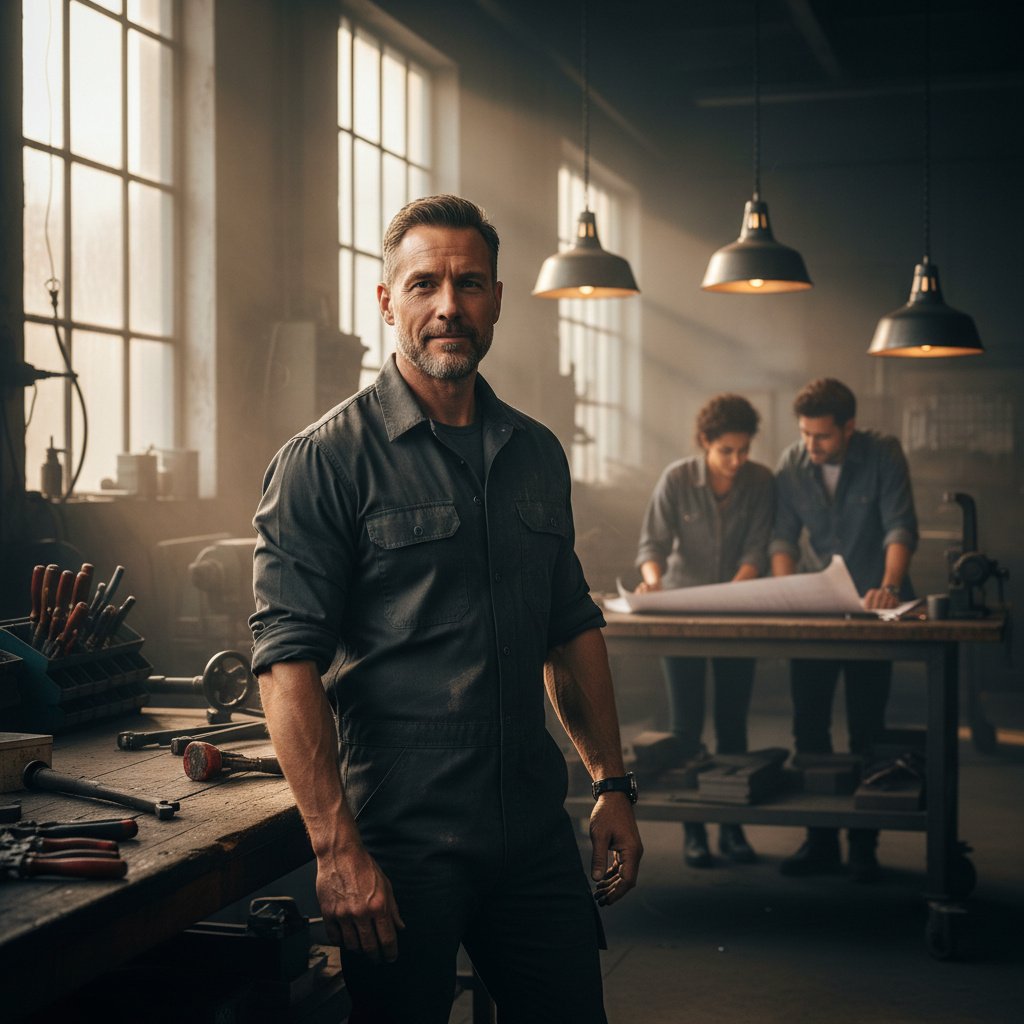
The uniform may be packed away in a footlocker, but the mission to protect and build the community continues every single morning when the shop lights turn on.
Book a 15 minute discovery call to find out more today at https://digifidelis.com/calendar/
Recent Comments