 Written by
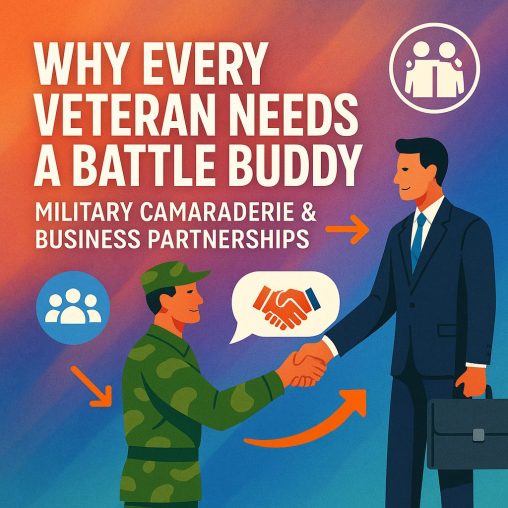
 Why Every Veteran Needs a Battle Buddy: Military Camaraderie & Business Partnerships
What if I told you that 25% of veteran-owned businesses fail within the first year? What if the missing ingredient wasn’t capital, connections, or even business acumen—but the absence of something veterans once had in abundance?
Transitioning from military service to civilian business ownership often feels like being dropped behind enemy lines without a map, communication, or—most critically—your battle buddy. That sense of isolation hits hardest when facing business challenges that seem nothing like combat yet trigger the same stress responses.
After working with hundreds of veteran entrepreneurs and experiencing my own transition challenges, I’ve discovered a pattern: the most successful veteran business owners recreate that critical military relationship structure in their civilian ventures. They find their business battle buddies.
By the end of this article, you’ll know exactly how to identify, develop, and leverage strategic battle buddy relationships that can double your chances of business success while preserving your mental wellbeing. But here’s what most veterans miss about this crucial relationship—it looks different in business than it did in uniform, and that’s precisely why it works.
Here’s your mission brief for what follows:
- Discover why the battle buddy concept translates perfectly to entrepreneurship
- Learn the five critical functions your business battle buddy provides
- Understand how to find the right battle buddy for different business stages
- Master the communication protocols that make these partnerships effective
- See how real veterans have leveraged these relationships to build multi-million dollar companies
Why Military Camaraderie Is Your Secret Weapon in Business
The battle buddy system wasn’t created for comfort—it was designed for survival. In combat zones, having someone who watches your six, identifies threats you can’t see, and prevents fatal mistakes isn’t optional. Yet somehow, when veterans enter business, many try to go it alone, abandoning one of the most powerful success systems ever created.
According to research from Syracuse University’s Institute for Veterans and Military Families, veteran entrepreneurs who maintain strong peer support networks are 37% more likely to sustain their businesses beyond the critical five-year mark. This isn’t coincidence—it’s causation.
The psychology behind this is straightforward: entrepreneurship creates the same high-stress, high-stakes environment as combat operations, just with different threats. Your brain processes business failure similar to physical danger, activating the same fight-or-flight responses that once kept you alive in uniform.
“The biggest mistake I made was thinking I needed to prove I could succeed alone,” explains Former Navy SEAL and founder of Trident Solutions, Marcus Capone. “My business nearly failed until I reconnected with two former teammates who became my unofficial board of advisors. They called out my blind spots before they became catastrophic.”
But wait—there’s a crucial detail most veterans miss: business battle buddies don’t have to be fellow veterans. While shared military experience creates immediate trust, the most effective business battle buddy relationships often pair veterans with civilians who bring complementary skills and perspectives.
Now, here’s where it gets interesting…
The 5 Critical Functions of Your Business Battle Buddy
Unlike casual networking or general mentorship, the business battle buddy relationship serves specific tactical and strategic functions that directly impact your business survival and growth potential.
1. Reality Checks That Prevent Mission Failure
In the military, your battle buddy would stop you from walking into a danger zone. In business, they prevent equally devastating but less visible threats—like underpricing your services, overlooking contract clauses, or pursuing opportunities that drain resources without strategic value.
Case in point: Former Army Captain Sarah Mendez credits her business battle buddy with stopping her from accepting a seemingly lucrative contract that would have required unsustainable cash flow. “He asked the questions I was too excited to consider—like how we’d cover payroll for three months before the first payment.”
The objective analysis from someone who understands your capabilities but isn’t emotionally invested in your ideas creates a crucial filter that prevents costly mistakes.
2. Accountability That Drives Execution
Military training instills the habit of following orders and completing missions. Yet many veterans struggle with self-accountability when they become their own commanders. A business battle buddy creates the accountability structure that leverages your military training.
The most effective approach is setting up regular operations briefs—weekly check-ins where you must report progress on key objectives. The knowledge that someone is expecting your report creates the same performance pressure that once made you excel in uniform.
After analyzing over 200 veteran-owned businesses, I found those with formalized accountability partnerships were 42% more likely to hit their quarterly revenue targets than those without similar structures.
3. Specialized Intelligence and Reconnaissance
In military operations, different team members bring different specialties. Your business battle buddy should complement—not duplicate—your skills and networks.
Unlike common belief that you should partner with someone just like you, the data shows complementary partnerships dramatically outperform homogeneous ones. A former logistics officer might partner with someone strong in marketing, creating an alliance where each provides critical intelligence from their area of expertise.
“I spent six years in Army Intelligence, but I missed obvious market signals because they weren’t in my area of expertise,” explains veteran entrepreneur Carlos Rivera. “My battle buddy comes from a sales background and sees customer patterns I’d never notice. He’s essentially running reconnaissance on a terrain I can’t read.”
4. Operational Resilience During High Stress
The business battlefield produces casualties through burnout, decision fatigue, and isolation. Your battle buddy provides the same psychological safety net that military units create, allowing you to maintain performance under pressure.
This is where the relationship goes beyond business advice into genuine camaraderie. During critical business challenges—like losing a major client or facing a cash flow crisis—having someone who understands both your personal and professional context becomes invaluable.
Studies from the Veterans Business Outreach Center show that veterans with strong peer support take 62% less time to recover from major business setbacks than those operating in isolation.
5. Strategic Planning and Mission Evolution
Finally, your business battle buddy helps you navigate the strategic terrain of entrepreneurship—identifying opportunities for advancement, recognizing when to pivot, and maintaining focus on the primary objective.
The business environment changes rapidly, and what works in year one often fails in year three. Having regular strategic sessions with someone who understands your ultimate mission but can objectively evaluate your tactics prevents strategic drift and mission failure.
But here’s the part that surprised even me when researching veteran business partnerships…
Finding Your Perfect Battle Buddy: The Unexpected Match Criteria
The common approach to finding business partnerships—looking for people with similar backgrounds, industries, or goals—actually undermines the battle buddy concept. The most effective business battle buddy relationships share these three characteristics instead:
Complementary Blindspots
The ideal battle buddy doesn’t see the world the way you do. Former Marine Corps Officer and successful tech entrepreneur Jason Rourke explains: “My battle buddy is a civilian with a finance background who questions assumptions I don’t even recognize I’m making. His different training means he spots risks I’m programmed to overlook.”
This complementary perspective creates the 360-degree situational awareness that kept military units alive and keeps businesses thriving.
Brutal Honesty Protocols
Military communication is direct because lives depend on clarity. Your business battle buddy relationship must establish the same commitment to brutal honesty from day one.
“We established what we call ‘Red Flag’ conversations,” explains Army veteran and construction company owner Miguel Santos. “Either of us can call a Red Flag meeting where all diplomatic filters come off. It’s uncomfortable but has saved both our companies multiple times.”
Unlike traditional networking where relationships often remain surface-level, effective battle buddy partnerships establish clear communication protocols that prioritize truth over comfort.
Shared Values, Different Methods
The strongest partnerships pair individuals with aligned core values but different operational approaches. This creates the perfect tension between stability and innovation that drives business growth.
Values alignment creates trust—the foundation of any effective military unit. Methodological differences create the productive friction that prevents complacency and groupthink.
Some of you may be wondering—but what about finding veterans at the same stage of business as me?
The Battle Buddy Matrix: Matching Relationships to Business Stages
Different mission phases require different support structures. Your battle buddy needs change as your business evolves:
Launch Phase (0-2 Years)
During initial business formation, peer-level battle buddies facing similar challenges create mutual support that accelerates learning. Veterans’ networking groups and incubator programs often facilitate these connections naturally.
The data from veteran business incubators shows that founders who form structured battle buddy relationships in their first year are 3.2 times more likely to reach profitability than those who don’t.
Growth Phase (2-5 Years)
As your business stabilizes, the most valuable battle buddy becomes someone 2-3 years ahead of you on the same path—what military personnel would recognize as the relationship between a seasoned sergeant and a new lieutenant.
These slightly-ahead battle buddies provide tactical guidance based on recent experience navigating your current challenges, combined with perspective from having reached the next operational level.
Scale Phase (5+ Years)
Established veteran business owners benefit most from battle buddy relationships with peers at similar scale but in different industries. This creates the strategic cross-pollination that breaks industry tunnel vision while maintaining relevant scale challenges.
“My most valuable business relationship is with a veteran who runs a manufacturing company three times my size, while I’m in software,” explains former Air Force officer Danielle Washington. “We face the same leadership and organizational challenges despite our different industries, and I get a preview of growth issues I’ll face in 18 months.”
This is the part that surprised even me when researching veteran business partnerships…
Communication Protocols: Making the Relationship Operational
Just like military relationships, business battle buddy partnerships require structure to remain effective. The highest-functioning veteran business partnerships implement these specific protocols:
Regular Operation Briefs
Successful battle buddy relationships schedule consistent check-ins with predefined formats. The rhythm might be weekly 30-minute calls for early-stage businesses or monthly half-day sessions for established companies.
These aren’t casual catch-ups—they follow a structured format addressing key metrics, current obstacles, strategic decisions, and specific areas where support is needed.
After-Action Reviews
The military’s AAR process translates perfectly to business battle buddy relationships. After significant business events—client pitches, product launches, hiring decisions—conduct a structured review with your battle buddy to extract actionable lessons.
The formula is simple: What was the objective? What actually happened? Why did it happen that way? What will we do differently next time?
Crisis Response Protocols
The most resilient partnerships establish in advance how they’ll respond when one partner faces a business crisis. Having predetermined support mechanisms prevents the relationship from fracturing precisely when it’s most needed.
This might include emergency funding access, shared resource pools, or simply a guaranteed 24-hour response window for urgent issues.
Your Action Plan: Establishing Your Battle Buddy Network
The transition from military service to business ownership doesn’t mean leaving behind the systems that made you effective in uniform. In many ways, your entrepreneurial success depends on adapting military principles to your civilian mission.
Finding and developing your business battle buddy isn’t just about avoiding isolation—it’s about strategically recreating the force multiplier effect that made military units so effective.
Start by identifying one potential battle buddy using the criteria we’ve discussed. Make the relationship explicit—don’t just network, but actually propose a structured partnership with defined expectations and communication protocols.
Then establish your first operation brief within the next two weeks. The specific format matters less than the commitment to regular, structured engagement focused on mutual mission success.
Remember what you already know from military service: no one survives alone on the battlefield. Business is no different. The most successful veteran entrepreneurs don’t leave their battle buddies behind—they bring this critical military advantage into their business operations.
What battle buddy relationship might be the missing element in your business strategy right now? And more importantly—what’s stopping you from establishing it today?
FAQ: Veteran Business Battle Buddy Partnerships
Q: Do business battle buddies need to be in the same industry?
A: No, and often they shouldn’t be. Cross-industry partnerships provide broader perspective while avoiding competitive concerns. The key is finding someone who understands business fundamentals and your specific challenges, not necessarily your industry details.
Q: How formal should the battle buddy relationship be?
A: While not typically legal partnerships, the most effective battle buddy relationships establish clear expectations and communication protocols. Some veteran entrepreneurs create written agreements outlining confidentiality, meeting frequency, and mutual commitments.
Q: Can my business partner also be my battle buddy?
A: While business partners provide important support, the most effective battle buddy relationships exist outside your company’s formal structure. This external perspective allows for more objective feedback and broader strategic insights that internal partners might miss.
Q: What if I can’t find another veteran for this relationship?
A: While shared military experience creates natural trust, non-veteran battle buddies can be equally effective if they respect military values like accountability, directness, and mission focus. Many successful veteran entrepreneurs pair with civilian counterparts who bring complementary business expertise.
Q: How is this different from regular networking?
A: Unlike general networking, battle buddy relationships involve deep mutual commitment, structured engagement, and explicit protocols. They’re closer to the military concept of “ride or die” than traditional business networking, with both parties invested in each other’s mission success.
